a website
that feels like
walking in.
When someone walks into a Fluxspace experience center, they feel it — the warm light, the hum, kids deep in flow. The site they visit before they ever arrive is a flat brochure. This page explores what it would take to close that gap: how the website itself can deliver the same awe — through ambient film, spatial scroll, WebGL, generative AI, and a dozen other techniques the top 1% of the web are shipping right now.
The first frame is not a photo.
It's a 10-second ambient loop of an actual classroom in flow. No headline overlay, no buttons fighting for attention. The visitor lands and the site is already breathing. That's the trade we want: marketing copy → mood, before a single word is read.
Four moments from the visit — rebuilt in the browser.
Every sensory beat of walking into a Fluxspace has a web equivalent in 2026. Not a metaphor — an actual capability shipping in browsers today.
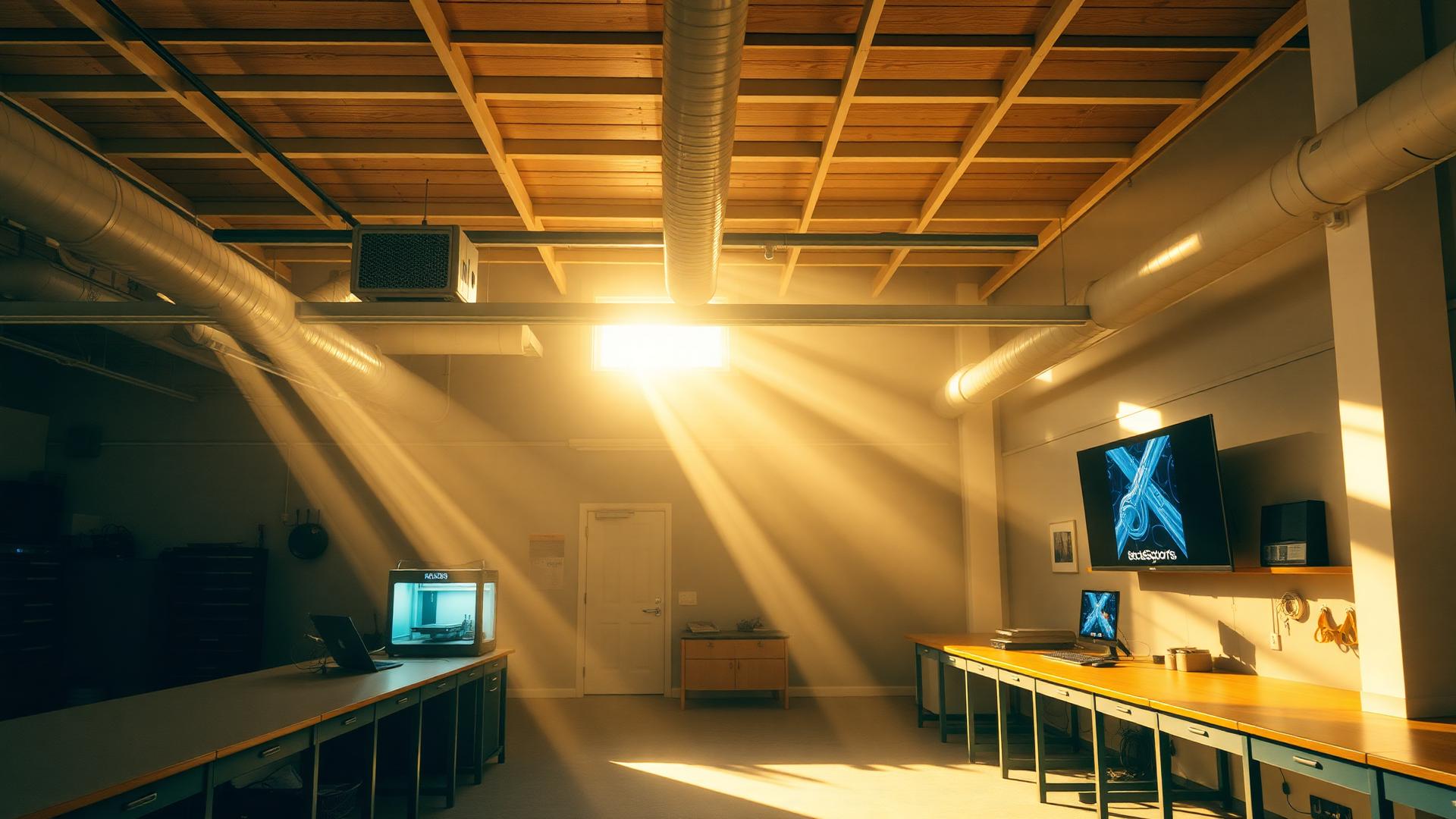 moment iThe door opens
Warm light, the hum of 3D printers, a wall of student work catching your eye.
on the new siteAmbient 4K hero film + WebGL particle field that reacts to the cursor. No stock photography, ever.
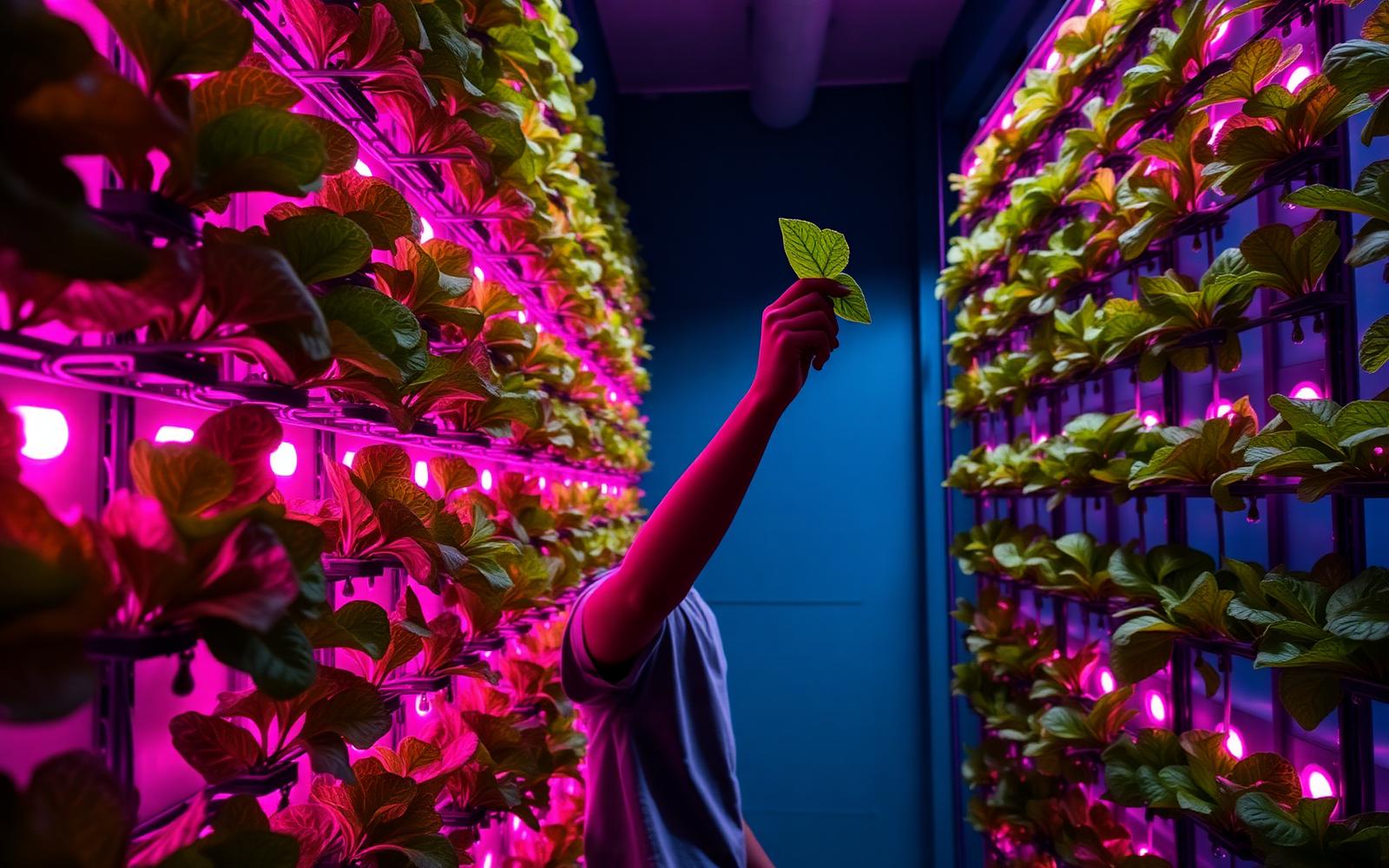 moment iiYou start walking
Your guide doesn't lecture — they let the rooms do the talking. You move through space.
on the new siteScroll-driven spatial storytelling. Every scroll inch is a step deeper, with parallax depth and native CSS scroll-timeline reveals.
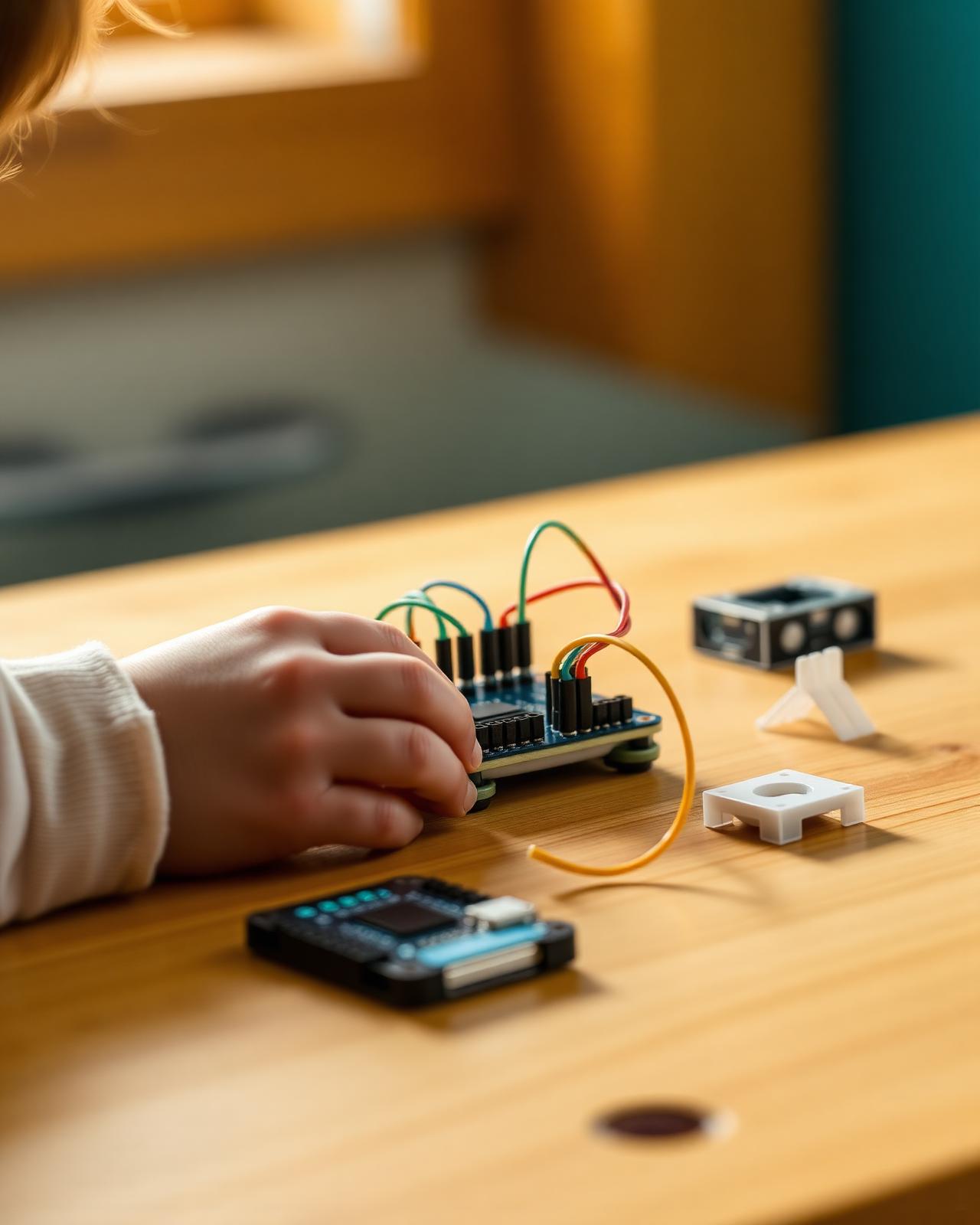 moment iiiSomething catches your hand
You pick up a micro:bit. You touch the lettuce. The experience becomes tactile.
on the new siteMagnetic cursor, spatial audio on hover, View Transitions that morph a thumbnail into a full case study. The page responds to you.
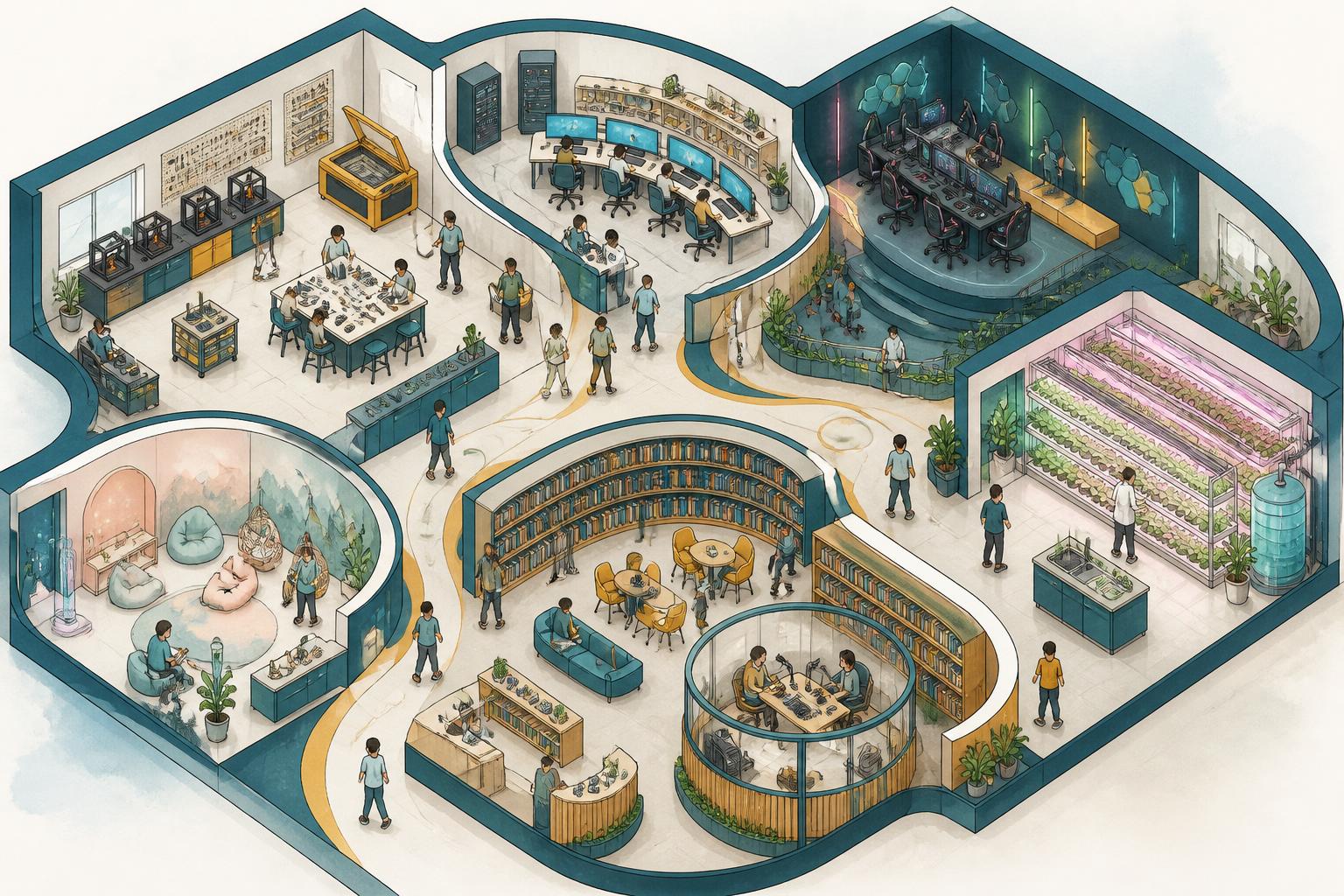 moment ivYou see it for your school
Our director sketches your gym on a whiteboard and shows what's possible.
on the new siteGenerative room previews. Upload your floor plan → AI render of a Fluxspace in your building in under 60 seconds.
Fifteen techniques the top 1% of the web are shipping right now.
Each one is in production at a site you've probably visited this week. Every one of them is buildable for fluxspace.io. None are on it today.
Ambient hero film
10-second 4K loop of an actual classroom in flow. Replaces the static photo. The first thing visitors see is movement, not marketing copy.
WebGL particle field
A live canvas behind the wordmark. Cursor-reactive flux lines, brand-coded, runs at 60fps on a Chromebook.
Spatial scrollytelling
The page is a guided walk. Each scroll inch = a step forward, with parallax depth and anchored captions that pin as the visual moves.
Scroll-driven CSS animations
animation-timeline: view() — native browser scroll animations. No IntersectionObserver, no JS framework tax. Ships today in Chromium.
View Transitions API
A room thumbnail morphs into the full case study with one CSS line. Native cross-page animation, no layout shift, no JS animation libs.
Magnetic custom cursor
A teal dot follows you and latches onto interactive elements. Tiny. Tells visitors a human cared about every pixel.
Hover spatial audio
Hover the Makerspace card — hear filament extruding. Hover Indoor Ag — hear water trickling. The web finally has a soundtrack.
Conversational hero (LLM)
Replace the search bar with “Ask Fluxy anything.” A principal types ‘grant funding for rural makerspaces’ and lands on the exact page + a generated answer.
Generative room previews
Upload your school floor plan → diffusion model renders a Fluxspace in 30 seconds. The single biggest ‘holy crap’ moment we can ship.
WebGPU 3D dollhouse
An inline, rotatable 3D model of each experience center. Click a room, fly the camera in. Replaces the photo gallery entirely.
Matterport walkthrough
A real captured 360° walkthrough of Norristown, embedded above the fold. The closest thing to actually being there.
Live data widgets
Real-time counter: students reached this week, prints completed today, lbs of lettuce harvested. Pulled from a private API on visit.
Personalized landing per district
URL or referrer detection rewrites the hero copy for the visitor's district. ‘Welcome, Lower Merion.’ Tiny touch, huge psychological lift.
Editable in-place case studies
MDX-driven story pages so your team ships a case study like writing a doc. No Webflow CMS gymnastics, no dev request queue.
View source as a brand moment
Right-click → View Page Source opens an ASCII-art Fluxspace logo and a recruiting note. Every senior dev who lands sees it.
Numbers that update while you read.
Pulled live from a private API, refreshed every visit. Today the site has zero numeric proof. A counter ticking up as a visitor reads is a small component and a permanent trust upgrade.
What the current fluxspace.io doesn't yet make people feel.
A deep read of every public page. Findings are specific — each one maps to a section, a piece of copy, or a measurable behaviour we observed.
The site is functional. It is not yet felt.
- • Static where it should move
- • Categorical where it should be human
- • A brochure where it should be a doorway
- • A Webflow shell hiding real, beautiful rooms
Three sites you can steal from.
Every comparable category — enterprise experience centers, K-12 makerspaces — has at least one site already solving a problem fluxspace.io hasn't tackled yet.
Cisco Experience Centers
↗Booking is the hero. Page opens with “Contact account manager,” a video, then exactly what to expect — interactive demos, custom agendas, the right experts.
Replace the “Our Purpose” CTA with “Schedule your visit” + a 30-sec ambient clip and a one-line promise of a tailored visit.
Nokia EEC — Dallas
↗“Fast facts” at a glance: sq-ft, demo zones, technology categories, address, hours. Hero shows the thing itself — lit racks, working labs.
Each of your 4 centers gets a card with sq-ft, room count, tech categories, drive-time radius, next open hours.
Center City PCS Makerspace
↗Leads with a concrete size claim — “20,000 sq ft hub” — and an explicit community-access framing. Equity scannable in seconds.
Lead the homepage with “10,000 sq ft of working prototype, four locations, open to every district in the region.”